
BEST COIR
PRODUCTS
SUPPLIER
Location
No.09, Pengiriwatte Mawatha, Mirihana, Nugegoda,
Colombo, Western Province, Sri Lanka.
Contact
+94 (0)76 791 4088
marketing@ecotrends.lk
BEST COIR
PRODUCTS
SUPPLIER
Location
No.09, Pengiriwatte Mawatha, Mirihana, Nugegoda,
Colombo, Western Province, Sri Lanka.
Contact
+94 (0)76 791 4088
marketing@ecotrends.lk
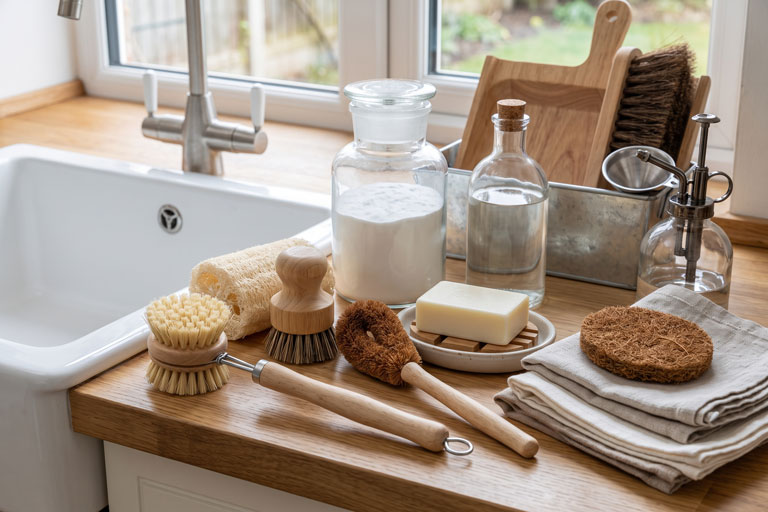
Here’s a question worth sitting with for a second. How many plastic sponges have you thrown away in your lifetime? Fifty? A hundred? Most of us have no idea, and honestly, that’s part of the problem. Every one of those sponges is still sitting in a landfill somewhere, slowly shedding microplastics into the soil. The good news? Swapping to zero-waste kitchen cleaning tools is one of the easiest sustainable changes you can make, and your dishes will actually come out cleaner.
I know that sounds like a big claim. Stick with me, because once you see what natural fiber can do next to a sad, smelly synthetic sponge, there’s no going back.
Let me explain what happens under your sink. A standard plastic sponge is made from polyurethane, a petroleum product. It starts breaking apart from the very first scrub, releasing tiny plastic fragments into your dishwater, which then flow into rivers and oceans. Scientists have found these microplastics everywhere from Arctic ice to human blood.
And then there’s the smell. You know the one. That sour, damp odor after a week of use? That’s bacteria having a party in the sponge’s synthetic pores, which trap moisture and never fully dry. Studies have found that used kitchen sponges can host more bacteria per square centimeter than a toilet seat. Lovely thought while you’re wiping your coffee mug, right?
Natural fiber tools solve both problems at once. They dry fast, they resist bacteria on their own, and when they finally wear out, they break down into plain organic matter. No landfill. No guilt. Just compost.
So let’s get into the five tools that deserve a spot by your sink.
If you buy just one thing from this list, make it a coir fiber brush. Coir is the stiff, golden fiber found between the hard shell and the outer husk of a coconut, and it has been used for scrubbing, rope making, and matting across South Asia for centuries. You can read more about the fiber itself on the Coco Coir Wikipedia page if you enjoy going down research rabbit holes like I do.
What makes coir so good at cleaning? The fibers are naturally coarse and springy, so they bite into burnt rice, dried curry, and baked-on cheese without you having to put your shoulder into it. At the same time, they’re gentle enough that they won’t scratch enamel, ceramic, or seasoned cast iron. That last one matters. Cast iron owners know the pain of finding a scrubber that cleans without stripping the seasoning you spent months building.
One of our customers in Melbourne put it perfectly. She told us, “I used this on my cast iron pan for the first time and kept waiting for it to fail. Six months later it’s still my favorite thing in the kitchen, and my old plastic brushes went in the bin.” That kind of feedback comes up again and again with coir.
A good brush from a quality fiber and coir products supplier like ECO TRENDS will last three to six months of daily use. When it’s done, unscrew or snap off any metal parts and toss the fiber and wooden handle into your compost.
The tawashi is a small, palm-sized brush that originated in Japan over a century ago, traditionally made from hemp palm and now commonly crafted from coconut coir. Its curved shape lets you get into corners, around faucet bases, and inside narrow jars where a big brush just flails around uselessly.
Tawashi brushes are also brilliant for vegetables. Instead of peeling your potatoes and carrots (and losing the nutrients in the skin), give them a quick scrub under running water. The firm bristles lift off soil without bruising the flesh. Japanese home cooks have been doing this for generations, and once you try it, peeling feels like a chore you never needed.
Surprise: loofahs don’t come from the ocean. They’re dried gourds, grown on vines like cucumbers. When the fruit matures and dries, the inside becomes a fibrous network that works beautifully as a soft scrubber.
A loofah is your go-to for glassware, nonstick pans, and anything delicate. It softens when wet, holds soap well, and rinses clean in seconds. Cut a large loofah into three or four pieces and you’ve got months of sponges from a single gourd. When one piece gets tired, compost it and grab the next. Cheap, simple, zero drama.
Here’s the thing about most cleaning tools: the handle outlives the bristles every single time. So why do we throw away the whole thing? A wooden dish brush with a replaceable head fixes that design flaw. You keep the beechwood handle for years and swap in a fresh coir or plant fiber head whenever the old one wears down.
It feels like a small detail, but the math adds up. One handle plus four replacement heads a year produces a tiny fraction of the waste of tossing four complete plastic brushes. Your wallet notices too, since replacement heads cost far less than full brushes.
For the truly stubborn jobs, the ones where you’re tempted to reach for steel wool, try a flat coir scourer pad instead. These dense, woven pads of coconut husk fiber handle blackened grill grates, oven racks, and pots you left on the stove a little too long (we’ve all been there).
Steel wool sheds metal fragments and rusts within days. A coir pad does neither. It keeps its structure through weeks of heavy use, and coir fiber contains natural lignin, which makes it slow to break down while you’re using it but fully biodegradable once composted. Nature really did think of everything with the coconut.
You’ve made the swap. Now keep your tools happy with three simple habits.
First, rinse well after every use. Soap residue and food particles shorten fiber life. Second, dry them bristles down. Stand brushes in a cup or hang them so water drains away from the wooden parts. Third, sanitize weekly by pouring boiling water over the fibers. That’s it. No special products, no fuss.
One mild warning, and this is where I’ll contradict what I said earlier about these tools being fuss-free: never leave natural fiber tools soaking in the sink overnight. They can handle water all day long, but constant soaking swells the wood and weakens the fiber binding. Give them a chance to dry and they’ll reward you with months of service.
You don’t need to throw out your plastic tools tomorrow. That would just create more waste, which defeats the point. Use what you have until it dies, then replace each item with a natural version. Within six months your sink area will have quietly transformed, one worn-out sponge at a time.
If you’re in the USA, Canada, Europe, or Australia, look for suppliers who source directly from coconut growing regions. Sri Lanka produces some of the finest coir in the world, and buying from the source supports the farming communities that have perfected this craft over generations. Retailers and bulk buyers can contact ECO TRENDS for fiber and coir products directly for wholesale inquiries.
Let’s talk numbers, because “sustainable” has unfortunately become shorthand for “expensive” in a lot of people’s minds. In this case, the reputation is wrong.
Say you buy plastic sponges in the typical three pack and replace them every two to three weeks, which is what hygiene experts actually recommend. That’s somewhere between 15 and 20 sponges a year, plus a plastic dish brush or two when the bristles splay. Add it up over a year and you’re spending more than you think for tools you literally throw in the bin.
Now run the natural version. Two coir brushes a year. A loofah or two, which cost pennies if you buy a whole gourd and cut it yourself. One wooden handle that lasts five years or more, with a few replacement heads. In almost every case the yearly total comes out lower, and it keeps dropping after the first year because the durable parts are already paid for.
There’s a hidden saving too. Natural fiber tools clean with less detergent because the fiber does more of the mechanical work. Households that switch often notice their dish soap lasting noticeably longer. Small thing? Sure. But small things that repeat every single day have a way of adding up, both for your wallet and for the planet. The zero-waste kitchen isn’t a luxury purchase. It’s just better math.
The strongest replacements are coir fiber brushes, tawashi brushes, loofah sponges, wooden dish brushes with replaceable heads, and coconut husk scourer pads. Each covers a different job, from heavy scrubbing to gentle glassware cleaning, and all of them are fully compostable at the end of their life.
With daily use and proper drying, a coir brush lasts three to six months, a loofah piece around one to two months, and a wooden handle with replaceable heads can serve you for years. Rinsing after use and drying bristles down makes the biggest difference to lifespan.
Coir bristles are firm, so for delicate nonstick coatings a loofah or soft plant fiber sponge is the safer pick. Save the coir brush for cast iron, stainless steel, ceramic, and enamel, where it shines without causing damage.
Yes, as long as they’re made from natural materials. Remove any metal staples or bands first. Coir fiber, loofah, and untreated wood all break down in a home compost bin, though coir takes a few months longer than food scraps due to its natural lignin content.
Far less. Synthetic sponges trap moisture in closed pores, which is why they smell within a week. Natural fibers like coir and loofah dry quickly and have natural resistance to microbial growth. A weekly rinse with boiling water keeps them fresh.
Look for manufacturers based in coconut producing countries such as Sri Lanka, where coir craftsmanship goes back generations. Buying from the source usually means better fiber quality and a shorter, more ethical supply chain.