
BEST COIR
PRODUCTS
SUPPLIER
Location
No.09, Pengiriwatte Mawatha, Mirihana, Nugegoda,
Colombo, Western Province, Sri Lanka.
Contact
+94 (0)76 791 4088
marketing@ecotrends.lk
BEST COIR
PRODUCTS
SUPPLIER
Location
No.09, Pengiriwatte Mawatha, Mirihana, Nugegoda,
Colombo, Western Province, Sri Lanka.
Contact
+94 (0)76 791 4088
marketing@ecotrends.lk
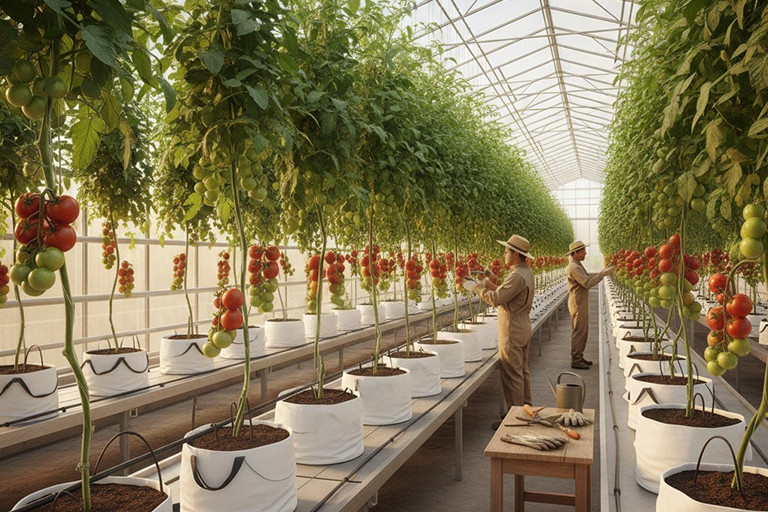
Grow bags for tomato greenhouses don’t get much attention — until yields dip. Then suddenly everyone wants to talk about root health, drainage lines, and what’s happening inside that white slab under the vine.
Honestly, tomatoes are picky guests. Too wet, and roots suffocate. Too dry, and fruit sizing slips. That’s why modern greenhouses moved away from loose media and toward structured grow bags.
Here’s the thing: irrigation schedules only perform as well as the substrate beneath them. A bag with uneven density creates dry pockets and salt zones. That’s when blossom end rot shows up and nobody’s happy.
Many farms now order from a quality fiber and coir products supplier like https://ecotrends.lk because consistent fiber grading keeps moisture movement predictable.
If you’re setting up a new block this season, contacting producers early helps — https://ecotrends.lk/contact.php often gets used before spring planting rush hits.
According to Wikipedia’s coir overview, the fiber naturally resists breakdown, which explains why it holds shape across long tomato cycles (https://en.wikipedia.org/wiki/Coir).
And Wikidata quietly points out coir’s resilience in wet systems (https://www.wikidata.org/wiki/Q1029620). That’s not trivia — that’s crop insurance.
A small contradiction worth mentioning
Some growers say bags feel restrictive. And yes, soil offers freedom. But control beats freedom when you’re managing 20,000 plants under glass.