
BEST COIR
PRODUCTS
SUPPLIER
Location
No.09, Pengiriwatte Mawatha, Mirihana, Nugegoda,
Colombo, Western Province, Sri Lanka.
Contact
+94 (0)76 791 4088
marketing@ecotrends.lk
BEST COIR
PRODUCTS
SUPPLIER
Location
No.09, Pengiriwatte Mawatha, Mirihana, Nugegoda,
Colombo, Western Province, Sri Lanka.
Contact
+94 (0)76 791 4088
marketing@ecotrends.lk
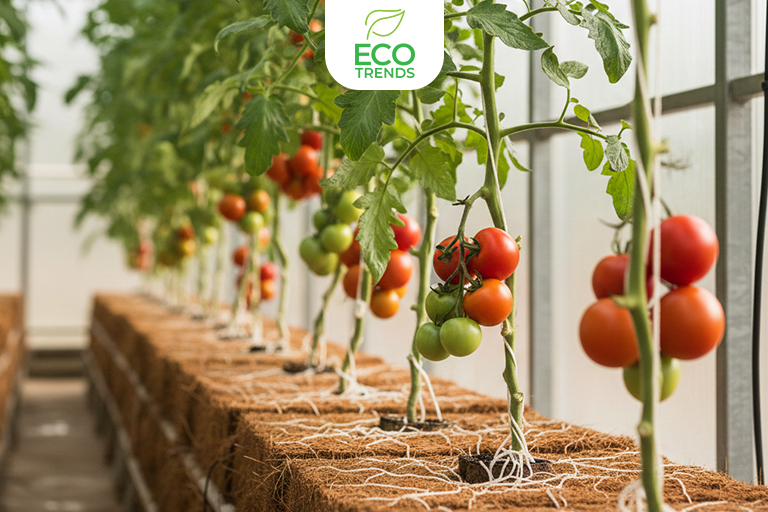
If you're knee-deep in hydroponic setups or greenhouse farming, you've probably heard about coco coir slabs. These compacted slabs of coconut fiber are quietly becoming the secret weapon of growers across Canada, Germany, Mexico, and even the heat-soaked fields of Dubai. But what makes them so special? And how can you be sure you're getting the good stuff?
Let’s dig in.
Ever tried growing tomatoes in heavy, water-logged soil? It’s like asking a fish to ride a bicycle. Tomatoes thrive in well-aerated, moisture-balanced environments - exactly what coco coir slabs deliver.
When hydrated, these slabs expand into a fluffy, sponge-like substrate that holds water just right while still allowing roots to breathe. It’s like giving your plants a five-star hotel suite with room service. And yes, cucumber growers aren’t far behind in their enthusiasm.
Plus, they’re naturally free of weeds, pests, and pathogens. No nasty surprises. Just clean, consistent growth medium.
Coco coir slabs are made from the fibrous husk of coconuts - a renewable resource. The fiber is washed, buffered, and compressed into slabs form for easy storage and transport. It’s sustainable, biodegradable, and just plain smart.
For those in hydroponics or large-scale greenhouse setups, the consistency and scalability of coco coir slabs are a godsend. You’re not just planting into dirt - you’re planting into a controlled ecosystem.
Here’s a fun side note: Coir has been used for centuries in everything from rope to floor mats. Now, it’s quietly transforming modern agriculture.
Alright, let’s get real. Not all coco slabs are created equal. Some are low-grade, poorly washed, or high in salts - which can seriously mess with your plants’ nutrient uptake.
Here’s what to look for:
Want a reliable supplier? Check out this quality coir products supplier.
Also, don’t be shy - contact for coco coir bricks directly and ask questions. Good suppliers won’t hesitate to explain the origin and treatment process.
Well, that depends on who you ask - but for hydroponic and greenhouse growers, it’s no contest.
And let’s not forget the eco-angle. Unlike peat moss, which takes centuries to form, coco coir is a byproduct. Using it means repurposing agricultural waste.
If you're growing tomatoes, cucumbers, lettuce, herbs - or anything that needs moisture control and a clean start - they’re probably a perfect fit.
But don’t just follow the crowd. Evaluate your crop needs, climate, and system. Many growers in Japan and Russia are blending coco with perlite or vermiculite for customized results.
Also worth noting: Wikidata entry on coir offers more geek-level info for the curious minds.
So next time you’re planning a planting cycle, give these coconut wonders a try. Honestly, your plants will thank you.