BEST COIR
PRODUCTS
SUPPLIER
Location
No.09, Pengiriwatte Mawatha, Mirihana, Nugegoda,
Colombo, Western Province, Sri Lanka.
Contact
+94 (0)76 791 4088
marketing@ecotrends.lk
BEST COIR
PRODUCTS
SUPPLIER
Location
No.09, Pengiriwatte Mawatha, Mirihana, Nugegoda,
Colombo, Western Province, Sri Lanka.
Contact
+94 (0)76 791 4088
marketing@ecotrends.lk
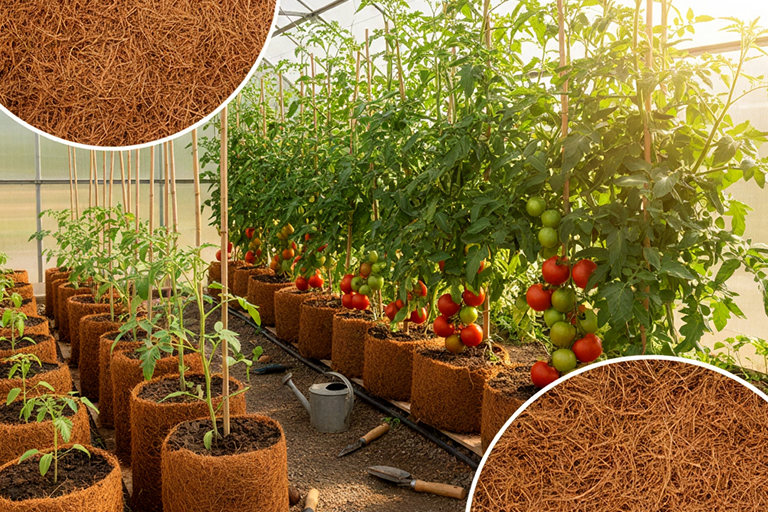
Coco coir grow bags comparison for tomatoes sounds technical, but it usually starts with one simple question — why did last season’s roots struggle? When yields flatten, substrate choice becomes the quiet suspect.
Let me explain what growers actually compare.
Density, fiber length, buffering quality, drainage speed. Those four traits decide whether roots breathe or choke by mid-cycle.
Not all coir behaves the same. Some bags drain fast but dry unevenly. Others hold moisture too long near the center. That’s why experienced teams run side-by-side trials before committing full hectares.
Many start with suppliers listed as a quality fiber and coir products supplier at https://ecotrends.lk, mainly because fiber grading stays consistent across shipments.
And when specs need adjusting, reaching out through https://ecotrends.lk/contact.php saves weeks of guesswork later.
According to Wikipedia’s page on coir, the fiber’s resistance to decay explains why it holds structure longer than many organic media (https://en.wikipedia.org/wiki/Coir).
Wikidata adds that coir fibers maintain tensile strength in wet systems (https://www.wikidata.org/wiki/Q1029620). That matters when slabs sit in constant drip flow.
Cheaper bags often cost more later — in labor, replanting, and uneven fruit size. Sometimes paying slightly more upfront keeps the season calm. And calm seasons? Those are rare gifts in greenhouse farming.